

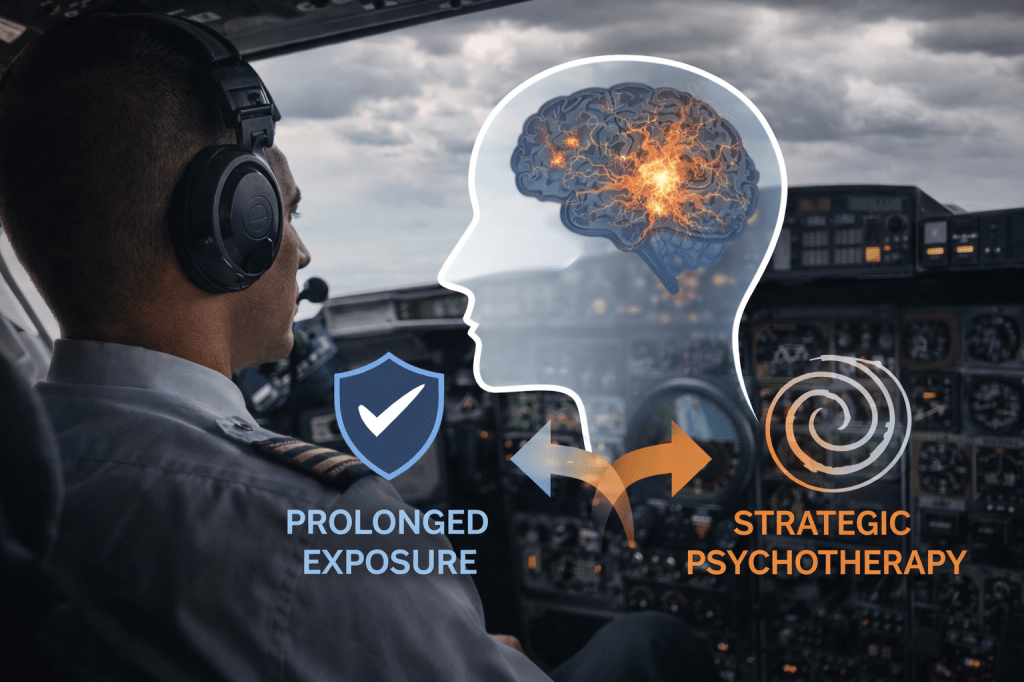
Post-Traumatic Stress Disorder represents one of the most complex and disabling psychological conditions in both clinical and operational settings. It may develop following exposure to traumatic events such as accidents, violence, natural disasters, or high-risk operational situations. My recent clinical research has focused on the integration of Prolonged Exposure Therapy and Brief Strategic Psychotherapy, with the aim of developing a more flexible and effective therapeutic model for the treatment of psychological trauma. This work originates from the awareness that, although Prolonged Exposure is one of the most validated evidence-based treatments for PTSD, some patients present resistance, difficulty accessing traumatic memories, or levels of hyperarousal that may compromise the therapeutic process.
The research was developed through a structured methodological pathway that initially involved a review of the international scientific literature on PTSD treatment models, with particular attention to evidence-based protocols, their practical clinical limitations, and integration strategies between therapeutic approaches. At the same time, an observational clinical study was conducted based on the progressive application of an integrated protocol to selected clinical cases, with continuous monitoring of symptom progression, treatment compliance, and patients’ emotional responses throughout therapy.
PTSD is characterized by the presence of intrusive symptoms such as flashbacks, nightmares, or recurrent memories, avoidance behaviors toward trauma-related thoughts or situations, cognitive and emotional alterations, and a persistent state of physiological and behavioral hyperarousal. A central element in clinical management is the multidimensional assessment of the patient, which in the developed model was conducted using structured diagnostic tools such as PCL-5, CAPS-5, and SCID-5. These instruments were used not only for initial diagnostic formulation but also as monitoring tools for therapeutic effectiveness throughout different treatment phases, allowing dynamic adaptation of clinical strategies based on symptom evolution and potential comorbidities.
The operational phase of the therapeutic model involved a modular structure of intervention. During the initial phase, comprehensive psychoeducation on trauma functioning and related psychophysiological reactions was introduced, with the aim of reducing the perception of loss of control and increasing treatment motivation. Concurrently, techniques derived from Brief Strategic Psychotherapy were applied to identify dysfunctional “attempted solutions,” namely avoidance, control, and hypervigilance behaviors that contribute to maintaining the disorder in the present.
Subsequently, the protocol included the progressive introduction of Prolonged Exposure techniques, structured through imaginal exposure to traumatic memories, in vivo exposure to avoided situations, and post-exposure emotional processing. The integration with the strategic model allowed targeted intervention on therapeutic resistance through behavioral prescriptions and perceptual-cognitive restructuring aimed at increasing emotional tolerance and improving treatment adherence.
An additional methodological component introduced in the model was the use of Ericksonian hypnosis as a therapeutic facilitation tool. Hypnosis was employed during preparatory phases of exposure and during moments of increased emotional activation, with the purpose of modulating hyperarousal, reducing anticipatory anxiety, and facilitating controlled access to traumatic memories. Through therapeutic metaphors, indirect communication, and subjective experience restructuring techniques, it was possible to address dysfunctional cognitive schemas frequently present in traumatized patients, such as chronic victimization, learned helplessness, and perceptual rigidity.
From a clinical perspective, the integrated model demonstrated several operational advantages. In particular, the integration of gradual exposure, strategic interventions, and hypnotic techniques improved the management of therapeutic resistance, reduced treatment dropout rates, and increased patients’ ability to process traumatic material progressively and sustainably. The modular approach also allowed greater personalization of therapeutic interventions, adapting them to individual patient characteristics, life context, and type of trauma experienced.
Psychological trauma assumes particular relevance in high-responsibility operational environments, such as the aviation domain. Pilots may be exposed to accidents or near-miss events, critical operational scenarios, cumulative stress related to decision-making responsibility, and high cognitive workload. In such contexts, trauma may manifest in subclinical forms, influencing fundamental processes such as attention, situational awareness, and decision-making performance. Psychological avoidance, which is typical of PTSD, may translate into cognitive rigidity, reduced stress management capacity, and increased operational risk, potentially affecting flight safety and human factors management.
The integrated approach combining Prolonged Exposure Therapy, Brief Strategic Psychotherapy, and hypnotic techniques therefore represents a promising therapeutic perspective in the treatment of psychological trauma. It allows increased therapeutic effectiveness, reduced treatment resistance, personalized clinical interventions, and the promotion of deep and long-lasting psychological change. Trauma treatment does not exclusively involve symptom reduction but also requires the reconstruction of the continuity of personal narrative and the restoration of a sense of control over one’s life. Promoting mental health in high-performance environments means not only caring for the individual but also contributing to collective safety, prevention of human error, and the development of increasingly resilience-oriented operational models.
 Lo Psicologo digitale